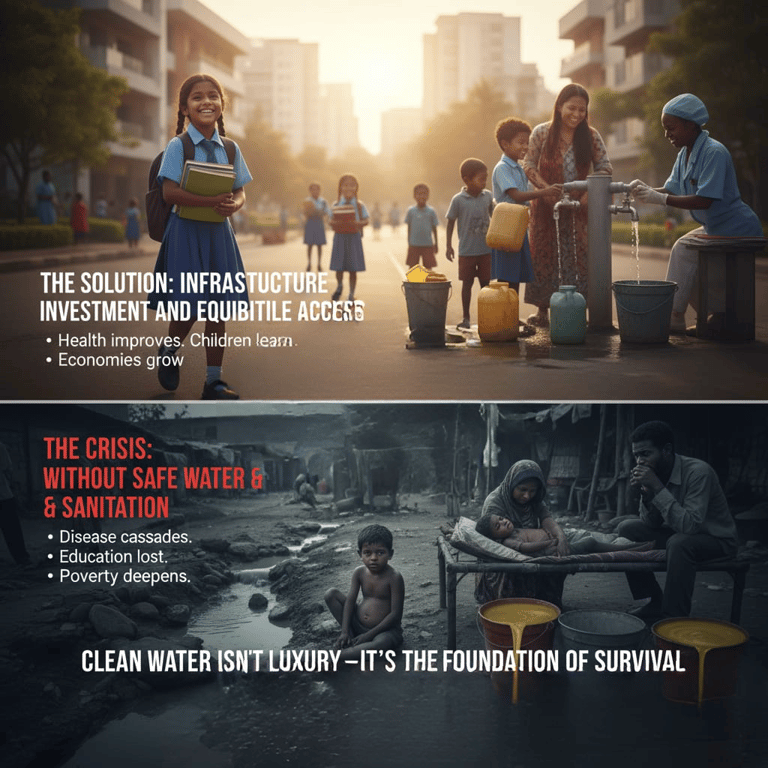
🌊 Clean Water Isn't Luxury—It's the Foundation of Survival
~ Samarth Krishna Kanakasubramaniam
💧 Access to clean water and sanitation isn't a privilege. It's survival.
👉 Yet 2.2 billion people lack safe drinking water, and 4.2 billion lack safe sanitation.
🚨 The Scale of the Crisis
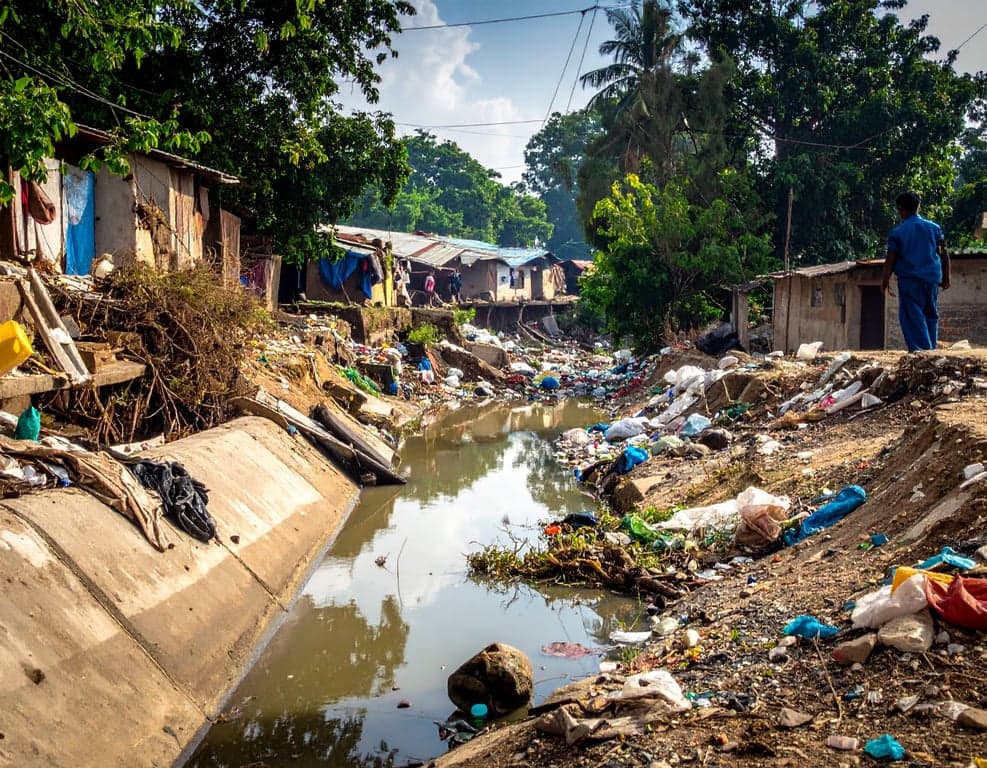
Most people without water and sanitation live in cities.
Every year, preventable waterborne diseases kill nearly 1 million people—mostly children under five.
Diarrheal diseases alone kill 297,000 children annually in sub-Saharan Africa.
Cholera outbreaks sweep through communities in weeks, killing hundreds.
Typhoid epidemics devastate entire neighborhoods.
These aren't inevitable deaths. They're policy failures.
⚠️ What Happens Without Safe Water and Sanitation
In cities without proper sanitation, disease spreads rapidly and devastation follows:
Disease cascades: Cholera, typhoid, dysentery, and other waterborne illnesses spread. Pregnant women die from infections. Children suffer stunted growth from chronic diarrhea. Families collapse under medical costs.
Health systems overwhelmed: Hospitals overflow with preventable cases. Resources are consumed by crisis rather than prevention. Healthcare workers burn out.
Economies stall: Workers miss work due to illness. Children miss school. Productivity plummets. Poverty deepens.
Community stability erodes: When death is constant, despair spreads. Trust in government collapses. Civil unrest increases.
The poorest always suffer first. They live closest to sewage, farthest from clean water sources. They can't afford bottled water. They can't pay for medical treatment when disease strikes.
🌍 Why This Matters Profoundly
One illness means:
Lost work
Lost income
Medical debt
Deeper poverty
Potential death
This is why clean water and sanitation are non-negotiable for human dignity.
✅ The Solution: Infrastructure Investment and Equitable Access
Cities that prioritize water and sanitation see dramatic transformation:
🏥 Health improvements are immediate and measurable:
Child mortality drops by 40% when clean water and sanitation become universal.
Diseases disappear or become rare.
Stunting and malnutrition decrease.
Maternal mortality falls.
Life expectancy rises by years in a single generation.
🏫 School attendance jumps:
Children spend less time sick and more time learning.
School performance improves dramatically.
Girls especially benefit—lacking private toilets, many drop out of school during menstruation.
💼 Economic productivity increases:
Healthy people work more, earn more, contribute more.
Families stop losing income to illness.
Healthcare costs drop dramatically.
Resources previously spent on treatment can be invested in education and opportunity.
🧼 Disease prevention becomes possible:
Major outbreaks become preventable through basic hygiene and sanitation.
Preventive health measures work.
Communities become resilient to disease.
🌟 Real Examples of Transformation
Dar es Salaam, Tanzania:
Invested in extending water and sanitation to informal settlements.
→ Child mortality fell by 35%, school enrollment rose, disease burden dropped dramatically, and communities stabilized.Rwanda:
After the genocide, it rebuilt water and sanitation infrastructure, prioritizing rural and underserved areas.
→ Child mortality dropped from 150 per 1,000 live births to under 40. Life expectancy nearly doubled. Disease burden decreased.Vietnam:
Expanded rural water access through community-based programs.
→ Waterborne disease declined by 75%, school enrollment increased, and agricultural productivity improved.
💧 The Uncomfortable Truth
In wealthy cities, water and sanitation are invisible—they just work. Toilets flush. Water flows. Life continues. People don’t think about it.
In poor cities, their absence is deadly. People die from preventable diseases. Children miss school. Families spiral into poverty. Communities destabilize.
Equitable access to these basics isn't charity.
It's the price of functioning cities.
It's the foundation that everything else rests on.
🚀 A Call to Action
Every pipe laid.
Every toilet built.
Every community connected to clean water.
👉 Each saves lives, stabilizes families, and transforms communities.
Water and sanitation aren't luxuries to be postponed.
They're the foundation of human dignity and stable cities.